The Temple of Rameses III
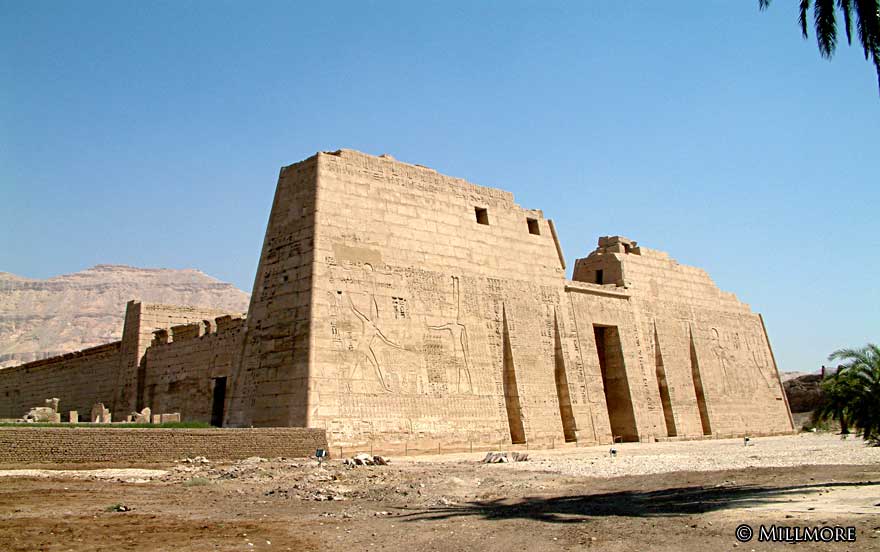
In ancient times, Madinat Habu was known as Djanet and according to ancient belief was the place where Amun first appeared. Both Hatshepsut and Tuthmosis III built a temple dedicated to Amun here and Later Rameses III constructed his larger memorial temple on the site.
 First court right side portico supported by columns in the shape of the god Osiris.
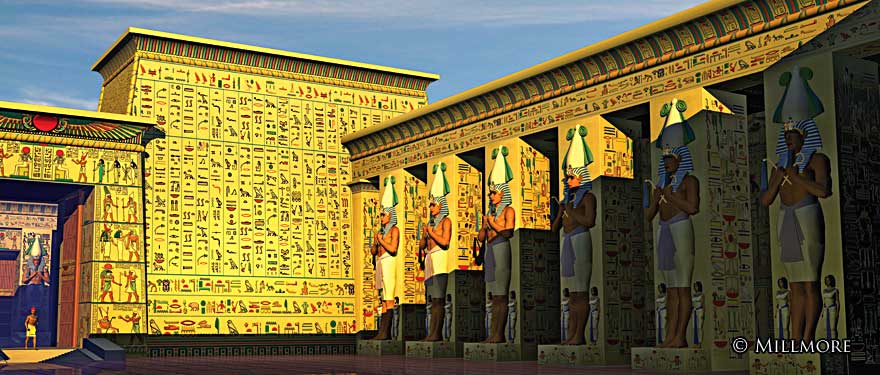
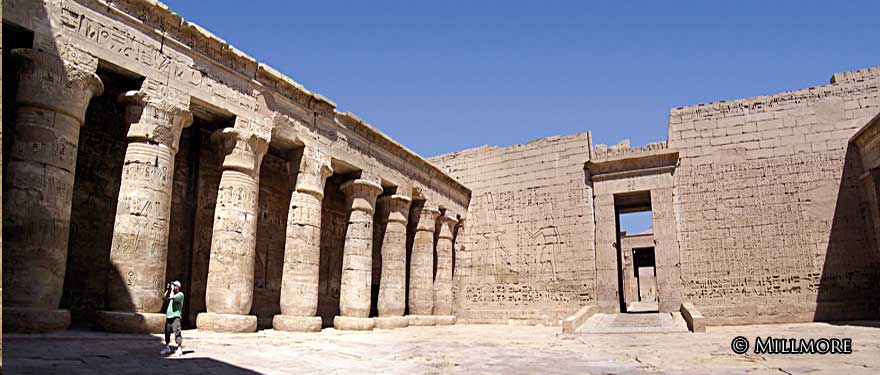


First Pylon – the temple of Rameses III. During his time, Djanet became the administrative centre of Western Thebes. The entire temple complex was surrounded by a massive fortified enclosure wall, with an unusual gateway at the eastern entrance, known as the pavilion gate. This structure, a copy of a Syrian Migdol fortress is something you would not expect to see in Egypt. Rameses III, a military man, probably saw the virtue in such a structure. It is likely Rameses lived here from time to time because a royal palace was attached at the south of the open forecourt of this temple, while priests’ dwellings and administrative buildings lay on either side of the temple. Originally, a canal with a harbour outside the entrance connected the temple to the Nile. But this was obliterated by the desert long ago.

In later times, because of its strong fortifications, it was the place of refuge during the civil war between the High Priest of Amun at Karnak and the viceroy of Kush. In the period of the Twenty-Fifth and Twenty-Sixth Dynasties (700 BC) the wives of Amon were worshipped in the Chapels called the Divine Adoratrices of Amun. During the Greek and Roman periods, the site was expanded and between the first and ninth centuries AD a Coptic city was built and the temple was used as a Christen church.
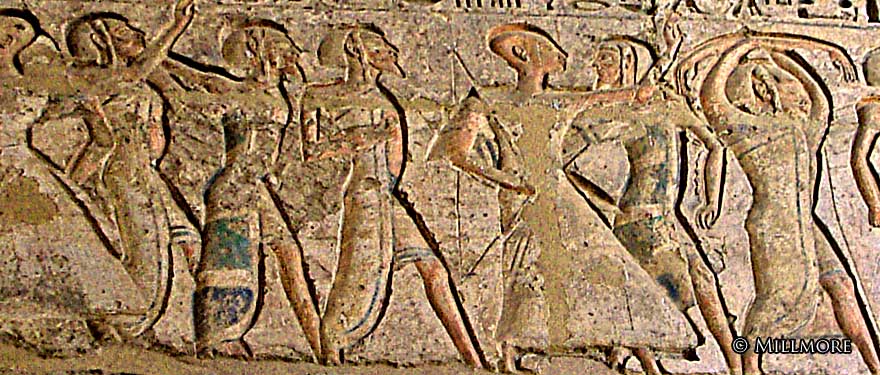
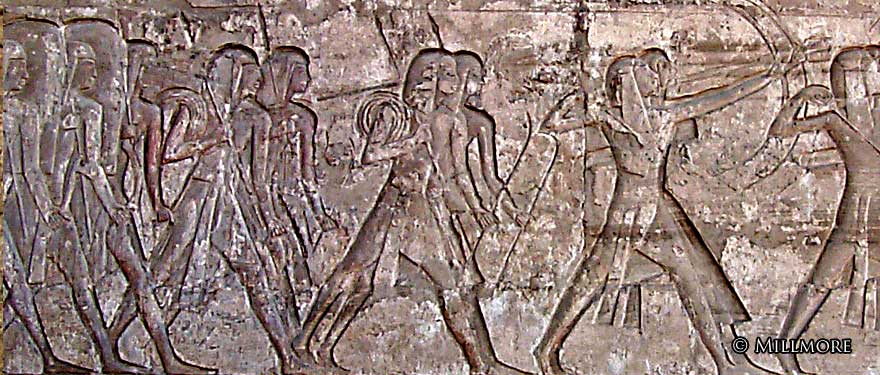
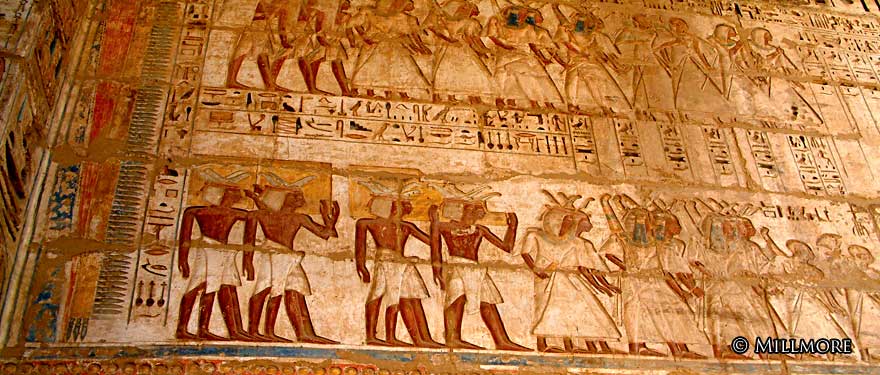
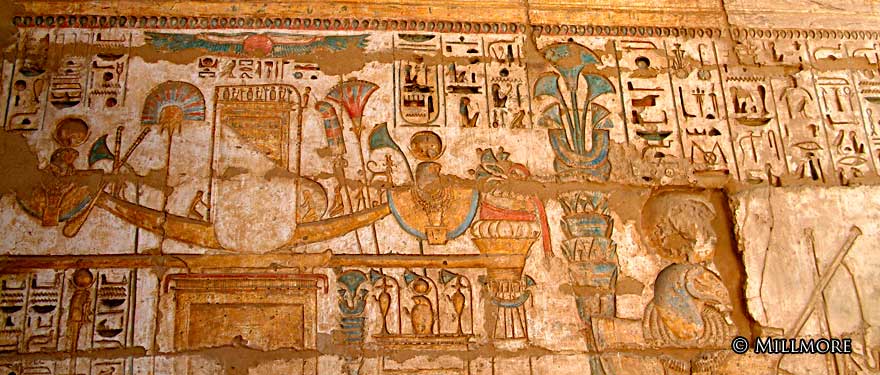
The exterior walls are carved with religious scenes and portrayals of Rameses III’s wars against the Libyans and the Sea Peoples. The king smiting his enemies is depicted on the first pylon, along with a list of the conquered lands. Some of the original paintwork is still intact on the well-preserved bas-reliefs that adorn the interior walls, adding to their wealth of intricate details.